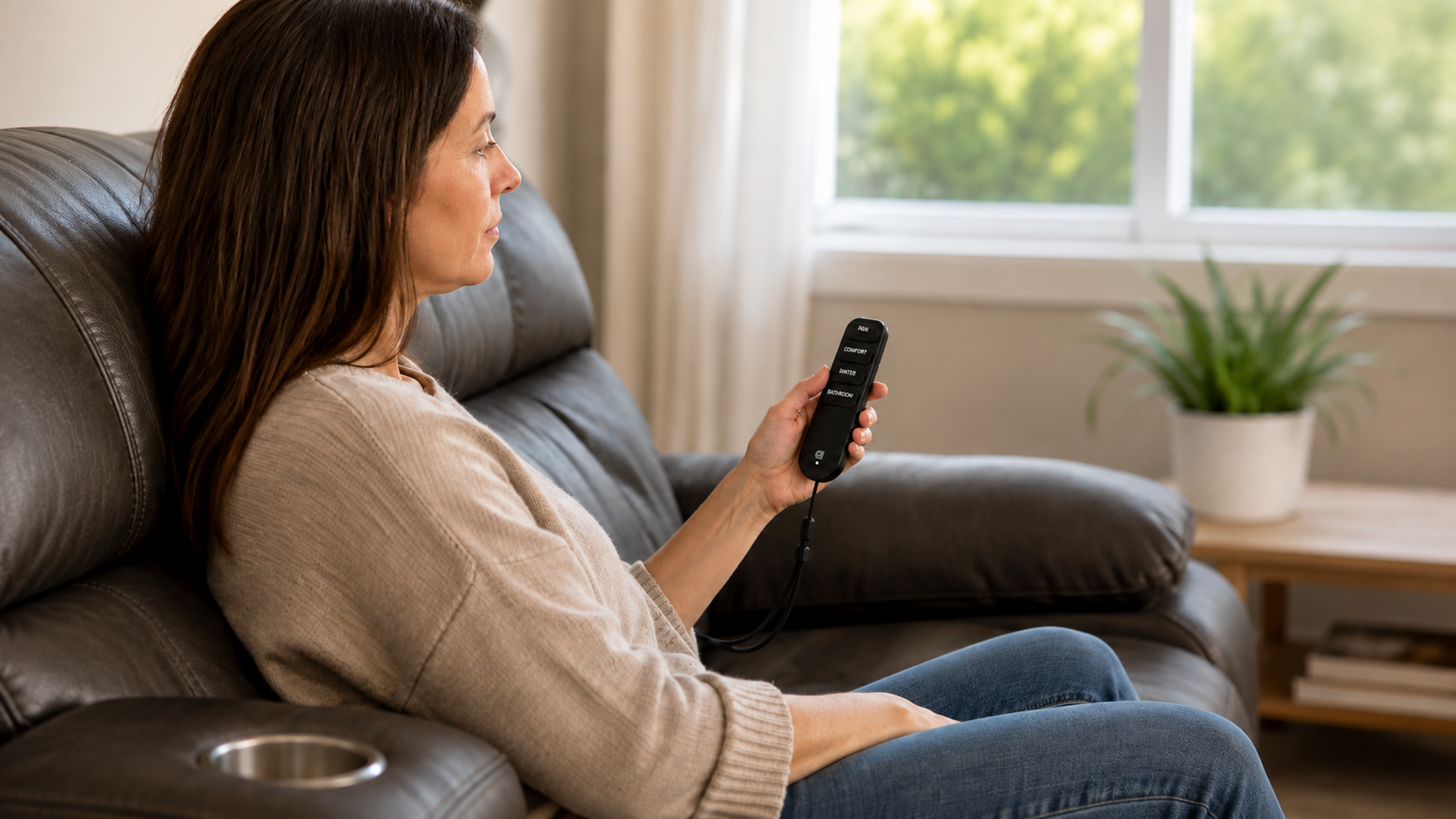
Accountable caregiver workflow.
CaregiverOne ensures every care request is assigned, acknowledged, and escalated until responsibility is accepted.
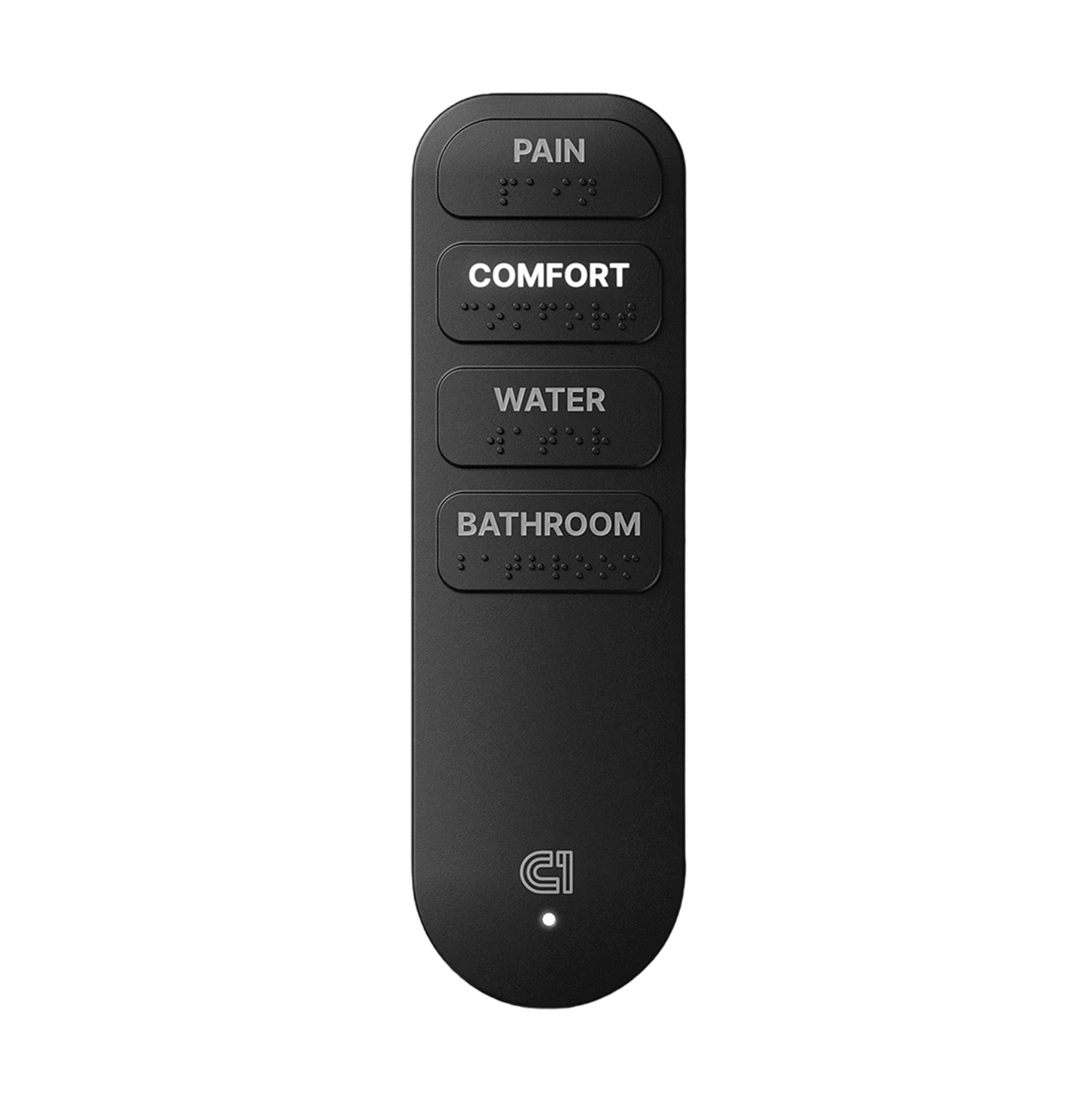
The Problem
Notifications create awareness. They don't guarantee action.
Most caregiver systems notify multiple caregivers simultaneously and assume someone will respond. The result is uncertainty:
• Who is responsible?
• Has anyone accepted the request?
• Should someone else intervene?
• Was the request ever completed?
As AI, remote patient monitoring, connected devices, and smart care environments generate more care events, accountability becomes just as important as detection.
Accountable Workflow
Every request follows the same deterministic process.
A care request is initiated.
Responsibility is assigned to one caregiver.
The assigned caregiver accepts responsibility or declines.
If no response is received, the request automatically escalates.
The process continues until responsibility is established.

Request Lifecycle
Event occurs
Request generated
Assigned caregiver
Responsibility accepted
Escalated if necessary
Resolution recorded

Use Cases
Applicable across care settings.
Aging in place
Assisted living and skilled nursing
Post-acute recovery
Neurodegenerative conditions
Limited speech or mobility environments
Differentiation
Why this is fundamentally different
Not another notification platform.
CaregiverOne coordinates accountable care workflows rather than simply notifying caregivers.One owner at a time.
Responsibility is explicit—not assumed.Acknowledgment establishes accountability.
The system knows when responsibility has been accepted.Automatic escalation.
Requests continue until responsibility is established.Deterministic outcomes.
Every request reaches a documented outcome.
Platform Extensions
The accountable workflow engine can support:
AI-generated care events
Remote patient monitoring
Nurse call integrations
Senior living platforms
Home healthcare
Hospital discharge programs
Care documentation
Operational analytics
Enterprise workflow orchestration
System + IP Overview
CaregiverOne is patent-pending intellectual property for accountable caregiver routing, acknowledgment, escalation, and workflow coordination across connected care environments.
Why This Matters
Healthcare is generating more events than ever through AI, remote patient monitoring, connected devices, and smart care environments. While detecting that something happened is becoming easier, ensuring someone takes responsibility is becoming harder.
CaregiverOne provides an accountable workflow layer between event detection and task completion by assigning ownership, requiring acknowledgment, and automatically escalating until every request reaches a documented outcome.
Acquisition & Licensing
CaregiverOne is patent-pending intellectual property available for acquisition or strategic licensing.
For strategic discussions: